9 min read

Client satisfaction plays an important role in the long-term success of MEP engineering firms. Delivering quality engineering work is essential, but clients also expect clear communication, reliable project timelines, responsive support, and consistent coordination throughout the project.
For MEP firms working with architects, general contractors, developers, and building owners, managing these expectations can become challenging when multiple projects are running simultaneously.
A lack of communication, unclear project responsibilities, delayed responses, and unexpected revisions can affect the overall client experience, even when the engineering work meets technical requirements.
To build stronger client relationships, MEP firms need to focus on the entire project lifecycle rather than only the final deliverables.
In this article, we explore practical ways MEP engineering firms can improve client satisfaction at every stage of a project.
Why Is Client Satisfaction Important for MEP Engineering Firms?
Client satisfaction affects more than the outcome of an individual project. It influences repeat business, referrals, professional reputation, and long-term business growth.
When clients have a positive experience working with an MEP firm, they are more likely to return for future projects and recommend the firm to other professionals.
Consistent client satisfaction can help MEP firms:
- Build long-term relationships with architecture and construction firms.
- Increase repeat project opportunities.
- Generate referrals and recommendations.
- Reduce misunderstandings and project disputes.
- Improve their reputation in the engineering industry.
- Build trust with new clients.
For growing MEP firms in the United States, maintaining strong client relationships can become an important competitive advantage.
8 Ways MEP Firms Can Improve Client Satisfaction Throughout the Project Lifecycle
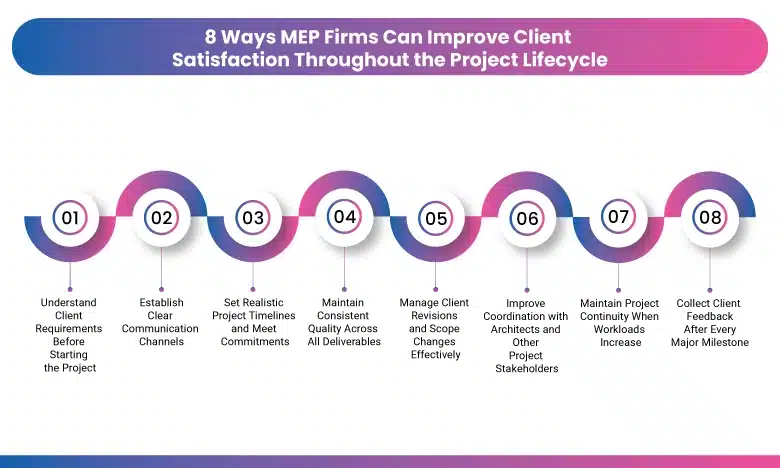
1. Understand Client Requirements Before Starting the Project
Client satisfaction begins before engineering work starts.
MEP firms should take the time to understand the client’s expectations, project objectives, scope of work, and delivery requirements before assigning resources.
A clear understanding at the beginning helps prevent misunderstandings and unnecessary changes later.
During the initial discussion, MEP firms should clarify:
- Project scope and expected deliverables.
- Project schedule and submission deadlines.
- Client-specific requirements and standards.
- Communication preferences and reporting expectations.
- Project responsibilities and approval procedures.
- Budget considerations and any known constraints.
For example, an architecture firm may require MEP engineering support for a residential development with specific drawing standards and milestone deadlines. Understanding these expectations early helps the MEP team plan its work accordingly.
2. Establish Clear Communication Channels
Poor communication is one of the common reasons clients become dissatisfied during a project.
Clients want to know who is responsible for their project, where things stand, and whom to contact when they have questions.
MEP firms should establish a clear communication process from the beginning.
Practical steps include:
- Assigning a dedicated project manager or point of contact.
- Defining preferred communication channels.
- Setting expectations for response times.
- Sharing regular project status updates.
- Recording important decisions and client instructions.
- Communicating potential issues as soon as they arise.
Clear communication helps clients stay informed and reduces uncertainty throughout the project.
3. Set Realistic Project Timelines and Meet Commitments
Project deadlines are important to architects, contractors, and developers because delays in one discipline can affect the overall project schedule.
MEP firms should establish realistic timelines based on project complexity, available resources, scope, and expected review cycles.
Instead of committing to unrealistic deadlines, firms should break the project into manageable milestones.
For example:
- Initial project information review.
- Design development and coordination.
- Drawing preparation.
- Internal quality review.
- Client submission.
- Revisions and final documentation.
If a potential delay occurs, inform the client early and explain its impact on the schedule.
Providing realistic updates and meeting agreed commitments helps build confidence in the engineering team.
4. Maintain Consistent Quality Across All Deliverables
Clients expect reliable and consistent engineering documentation throughout a project.
Even small documentation issues can lead to additional review comments, clarification requests, and unnecessary coordination efforts.
MEP firms should establish a consistent quality control process before issuing deliverables.
This process may include:
- Internal technical reviews.
- Drawing and documentation checks.
- Coordination reviews with other disciplines.
- Verification of client-specific requirements.
- Review of revisions before resubmission.
- Final checks against the agreed project scope.
When multiple engineers or external production teams contribute to a project, standardized documentation guidelines become especially important.
A consistent review process helps ensure that every submission meets the firm’s quality expectations.
5. Manage Client Revisions and Scope Changes Effectively
Project requirements can change as clients review drawings, provide feedback, or receive updated information from other project stakeholders.
How an MEP firm handles these changes can significantly influence client satisfaction.
Firms should establish a structured revision management process.
When receiving a change request, the project team should:
- Review the requested changes.
- Identify which engineering disciplines are affected.
- Determine the impact on the existing project scope.
- Evaluate schedule and resource requirements.
- Communicate any additional costs or timeline changes.
- Obtain approval where required.
- Update the relevant drawings and documentation.
The goal is to handle changes professionally while keeping clients informed about their impact.
Clear revision management prevents confusion and helps maintain a positive working relationship.
6. Improve Coordination with Architects and Other Project Stakeholders
MEP engineering does not happen independently. MEP firms regularly coordinate with architects, structural engineers, contractors, and other project stakeholders.
Poor coordination can lead to conflicting information, repeated revisions, and delays.
To improve the client experience, MEP firms should establish a collaborative coordination process.
This includes:
- Reviewing architectural and structural backgrounds before starting design work.
- Identifying missing or conflicting project information.
- Communicating design-related concerns early.
- Sharing coordination updates with relevant stakeholders.
- Using BIM coordination tools where appropriate.
- Tracking unresolved comments and decisions.
When coordination issues are identified early, teams can resolve them before they affect project delivery.
This also makes collaboration easier for architecture firms and contractors working with the MEP consultant.
7. Maintain Project Continuity When Workloads Increase
An MEP firm’s ability to manage client expectations can become challenging when project demand increases.
Internal engineers may be handling multiple deadlines, project managers may have limited capacity, and new project assignments may put additional pressure on existing teams.
This can affect response times, documentation quality, and project delivery.
To maintain client satisfaction, MEP firms should plan resources based on project demand and identify when additional engineering support is needed.
Working with a reliable outsourced MEP engineering team can help firms:
- Add production capacity during busy periods.
- Manage multiple project deadlines.
- Support internal engineers with documentation tasks.
- Maintain progress across ongoing projects.
- Reduce pressure on existing team members.
However, outsourced teams should follow the firm’s established workflows, documentation standards, and communication procedures.
The objective is to expand project capacity without disrupting the client’s experience or the firm’s existing processes.
8. Collect Client Feedback After Every Major Milestone
Client satisfaction should not be evaluated only after a project is completed.
MEP firms should regularly collect feedback during important project stages to identify concerns before they become larger problems.
Useful questions include:
- Are the deliverables meeting your expectations?
- Is communication clear and timely?
- Are project milestones being achieved as agreed?
- Are coordination requirements being addressed?
- Is there anything we should improve during the next project stage?
Firms can collect feedback through project review meetings, email follow-ups, or short client surveys.
After receiving feedback, the team should identify areas for improvement and communicate the actions being taken.
This demonstrates that the firm values the client’s experience and is committed to improving its services.
Common Client Satisfaction Mistakes MEP Firms Should Avoid
Even experienced engineering firms can create a poor client experience when project communication and management are not handled properly.
Some common mistakes include:
1. Unclear project scope: Starting work without confirming deliverables and responsibilities can create disagreements later.
2. Delayed communication: Taking too long to respond to client questions can reduce confidence in the project team.
3. Unrealistic commitments: Promising delivery dates without evaluating available resources can lead to missed deadlines.
4. Inconsistent documentation: Different drawing standards and documentation practices can create additional review work.
5. Poor revision tracking: Failing to communicate changes can result in confusion and repeated work.
6. Ignoring client feedback: Repeating the same mistakes across projects can damage long-term relationships.
Avoiding these issues requires a structured approach to project management, communication, and quality control.
How the Right Outsourced MEP Engineering Partner Can Support Client Satisfaction
For growing MEP engineering firms, maintaining client satisfaction while managing multiple projects requires sufficient engineering and production capacity.
An experienced outsourced MEP engineering partner can support internal teams by handling assigned design and documentation tasks while following the firm’s established project requirements.
However, the right partner should offer more than additional production resources.
MEP firms should look for an outsourcing partner that can:
- Understand project scope and client requirements.
- Follow established engineering and documentation standards.
- Maintain clear communication with internal project teams.
- Support agreed project schedules.
- Manage revisions and drawing updates.
- Work with the firm’s preferred software and BIM workflows.
- Maintain consistent quality across assigned deliverables.
With the right working relationship, outsourced engineering support can help MEP firms manage project demands while maintaining their existing client service standards.
How MVN Engineering Supports MEP Firms
MVN Engineering Services provides MEP design and BIM support to engineering firms working on projects across the United States and Canada.
We understand that MEP firms need dependable engineering support to manage project requirements, delivery schedules, and documentation expectations.
Our services include:
- MEP Design Services
- HVAC Design Services
- Electrical Design Services
- Plumbing Design Services
- Fire Protection Design Services
- MEP BIM Services
- BIM Coordination and Clash Detection
- Shop Drawings and Engineering Documentation
Our approach focuses on understanding client requirements, following established project standards, and coordinating with internal engineering teams.
Whether your firm needs additional support for ongoing projects or production assistance during periods of increased workload, MVN Engineering can help extend your engineering capabilities.
Looking for reliable MEP design and BIM support? Connect with MVN Engineering to discuss your upcoming projects and engineering requirements.
Conclusion
Improving client satisfaction requires consistent effort throughout the entire project lifecycle. From understanding initial requirements to managing revisions, coordinating with stakeholders, and delivering final documentation, every interaction influences the client’s experience.
MEP firms that establish clear communication, realistic schedules, consistent quality checks, and reliable project workflows are better positioned to build long-term client relationships.
When project demand increases, working with a dependable outsourced MEP engineering partner can also help maintain delivery consistency without putting additional pressure on internal teams.
Ultimately, satisfied clients are more likely to return, recommend your services, and build lasting business relationships with your firm.