
 5 min read
Large-scale construction projects today are more demanding than ever. From high-rise developments to healthcare facilities and industrial complexes, expectations around performance, sustainability, and delivery timelines continue to rise. At the same time, MEP design and consulting firms face increasing pressure to deliver complex projects faster while managing limited internal resources and rising operational costs. As a result, many MEP Design and Consulting Firms are making a strategic shift: outsourcing MEP design services. What was once viewed primarily as a cost-saving measure has now evolved into a scalable, efficiency-driven strategy that enables firms to handle larger workloads, improve coordination, and maintain high-quality delivery.
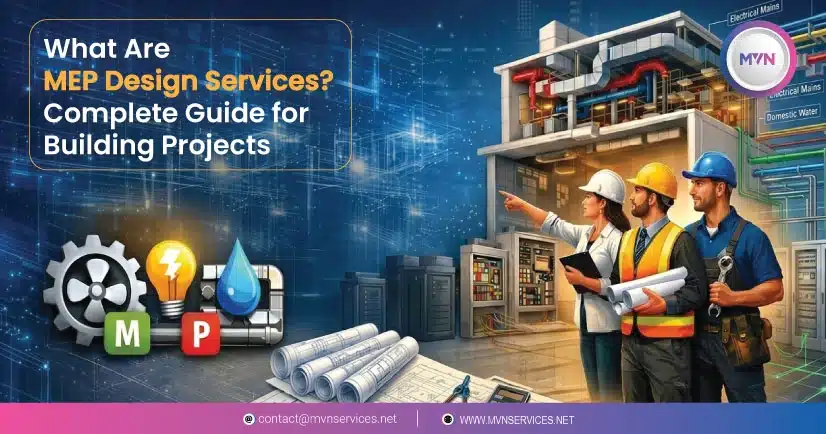
What is MEP Design and Why It Matters
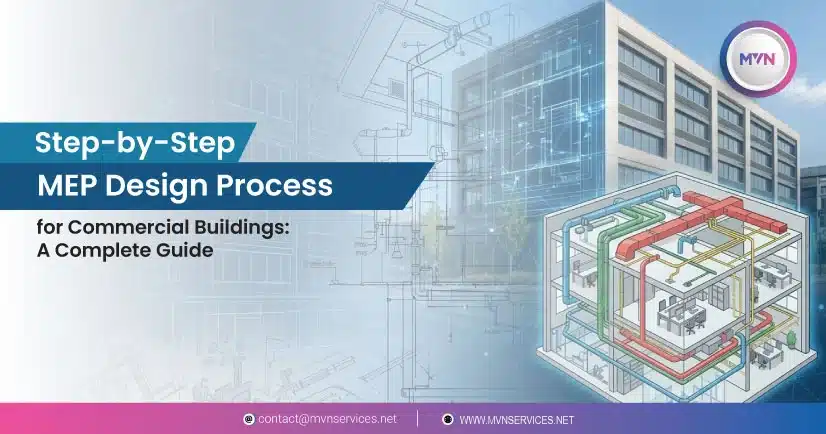
MEP design is the backbone of any functional building. It ensures that built environments are not only structurally sound but also efficient, safe, and comfortable.
- Mechanical systems manage HVAC (heating, ventilation, and air conditioning)
- Electrical systems handle power distribution, lighting, and safety.
- Plumbing systems ensure water supply, drainage, and sanitation.
In large-scale projects, these systems are deeply interconnected, and even a minor coordination issue such as a duct clashing with a beam can lead to costly rework and delays. This is why delivering accurate, coordinated, and code-compliant MEP design services is critical for MEP firms, often achieved through strategic partnering with specialized design teams to ensure project success.
Why MEP Design and Consulting Firms Are Outsourcing MEP Design Services
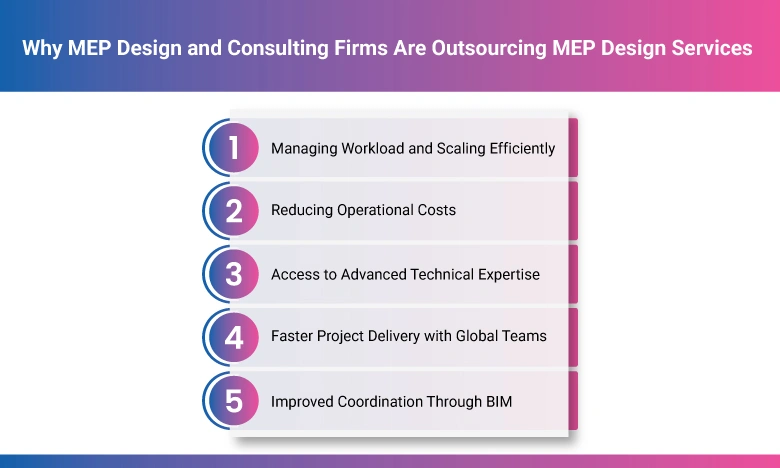
1. Managing Workload and Scaling Efficiently
Large projects often require more resources than in-house teams can handle. Outsourcing allows MEP firms to:
- Scale design capacity based on project demand
- Handle multiple large projects simultaneously
- Avoid overloading internal teams
This flexibility is essential for maintaining delivery timelines without compromising quality.
2. Reducing Operational Costs
Maintaining a large in-house team comes with significant overhead salaries, training, infrastructure, and software. By outsourcing, firms can:
- Convert fixed costs into variable project-based expenses
- Reduce operational overhead
- Improve overall profitability
Outsourcing destinations like India provide access to skilled engineers at competitive costs without sacrificing quality.
3. Access to Advanced Technical Expertise
Modern MEP design requires specialized knowledge and proficiency in BIM tools like Autodesk Revit. Outsourcing partners offer:
- Experienced MEP engineers
- BIM modelers and coordinators
- Expertise across sectors (healthcare, commercial, industrial)
This allows firms to enhance their technical capabilities without long-term investment.
4. Faster Project Delivery with Global Teams
Time is a critical factor in large-scale projects. Outsourcing enables:
- Round-the-clock productivity through time-zone differences
- Faster design iterations and approvals
- Continuous workflow across global teams
This “follow-the-sun” approach significantly improves turnaround time.
5. Improved Coordination Through BIM
Coordination challenges increase with project scale and complexity. Using BIM workflows, outsourced teams can:
- Perform early clash detection
- Integrate with architectural and structural models
- Deliver coordinated, construction-ready designs
This results in:
- Reduced rework
- Fewer site conflicts
- Smoother execution
Challenges Without the Right Outsourcing Strategy
Without proper planning or the right partner, outsourcing can create issues such as:
- Communication gaps
- Inconsistent quality
- Coordination delays
- Compliance risks
These challenges can directly impact project timelines, costs, and client satisfaction.
Is Outsourcing MEP Design Risky?
Outsourcing does involve risks but they are manageable with the right approach. Common concerns include:
- Communication barriers
- Quality control
- Data security
- Project coordination
Experienced outsourcing partners address these through:
- Structured communication and reporting systems
- Dedicated project managers
- Robust QA/QC processes
- Secure data-sharing protocols
When managed correctly, outsourcing becomes a controlled and reliable extension of the internal team.
Scaling MEP Capabilities Through Offshore Collaboration
As project demands increase, many MEP firms are partnering with offshore teams to expand their capabilities without expanding their internal workforce. Countries like India have become key outsourcing hubs due to:
- Strong engineering talent
- Familiarity with international standards (ASHRAE, NFPA, IEC)
- Expertise in BIM and digital workflows
Offshore teams act as an extension of in-house operations by:
- Delivering coordinated models and documentation
- Supporting large-scale and fast-track projects
- Reducing internal workload pressure
This approach allows MEP firms to focus on client management, design strategy, and project leadership.
Conclusion
Outsourcing MEP design services is no longer just a cost-cutting tactic; it has evolved into a strategic necessity for MEP design and consulting firms managing large-scale projects. It allows firms to scale operations efficiently, access specialized expertise, and improve coordination and overall design quality while ensuring faster and more reliable project delivery. Now they are able to find the right outsourcing partner who provides quality engineering services. With the right outsourcing partner, such as MVN Engineering, MEP firms can strengthen their capabilities, minimize risks, and remain competitive in an increasingly complex and demanding construction landscape.