
 4 min read
Outsourcing MEP documentation is increasingly common among engineering firms and contractors in the U.S. It helps meet tight deadlines, manage costs, and scale project delivery efficiently. However, delegating documentation comes with a significant risk: without proper safeguards, the original design intent can be misunderstood or lost, leading to miscommunication, rework, and costly delays.
In this article, we explore proven strategies to protect design intent when outsourcing MEP documentation and BIM services, ensuring that your projects are delivered exactly as planned.
What is Design Intent in MEP Projects?
Design intent refers to the underlying purpose and rationale behind every engineering decision, from system layout and sizing to material choices and compliance standards. It ensures that the final installation meets functional, aesthetic, and safety requirements.
When MEP documentation is outsourced, preserving this intent is critical. A well-structured approach guarantees that the drawings, models, and specifications created by remote teams align perfectly with your vision.
Why Delegation Requires Safeguards
Delegating documentation is a standard practice in U.S.-based AEC firms. While it improves efficiency, it introduces challenges:
- Misinterpretation of specifications by remote teams
- Loss of consistency in documentation standards
- Coordination errors between disciplines
- Version control issues and outdated deliverables
These challenges make it essential to implement structured safeguards to protect design intent.
Best Practices to Protect Design Intent When Outsourcing MEP Documentation
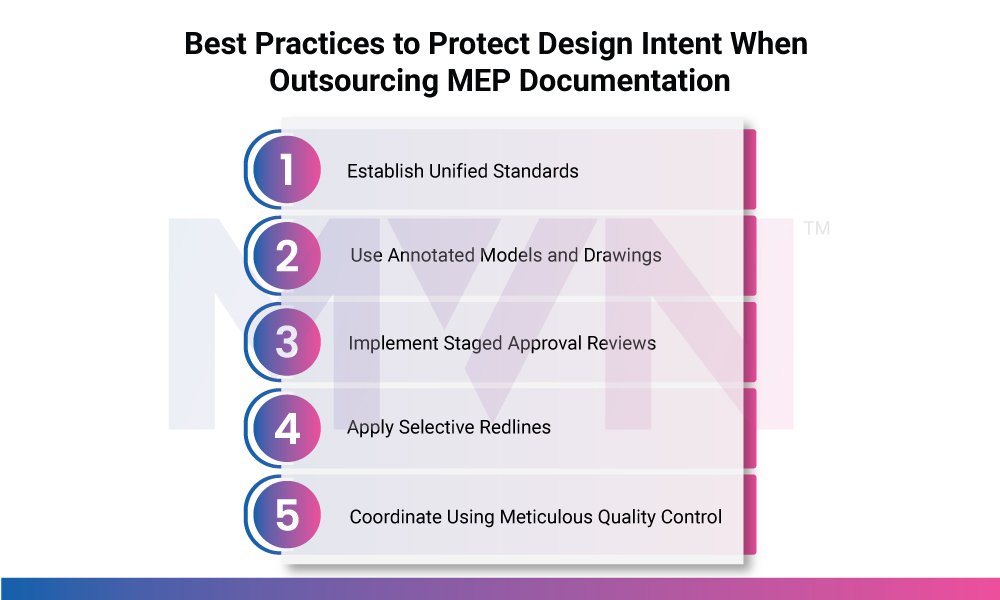
1. Establish Unified Standards
- Create project-specific templates and naming conventions for drawings and models.
- Define Level of Detail (LOD) for all model elements to clarify how much information each component should carry.
- Include building codes, material standards, and performance criteria in project files.
- Provide training and examples to ensure all team members understand and follow the standards.
2. Use Annotated Models and Drawings
- Apply labels, keynotes, notes, and dimensions directly in 3D models and drawings.
- Maintain a consistent annotation style across all views and components.
- Tag repetitive elements with keynotes to link them to a material or function legend.
- Allocate reviewers from all disciplines to verify annotated components align with design intent.
3. Implement Staged Approval Reviews
- Break documentation reviews into phases at critical milestones.
- Use version-controlled systems to maintain audit trails and prevent outdated files from circulating.
- Design leads review and approve each phase to ensure alignment with the original design.
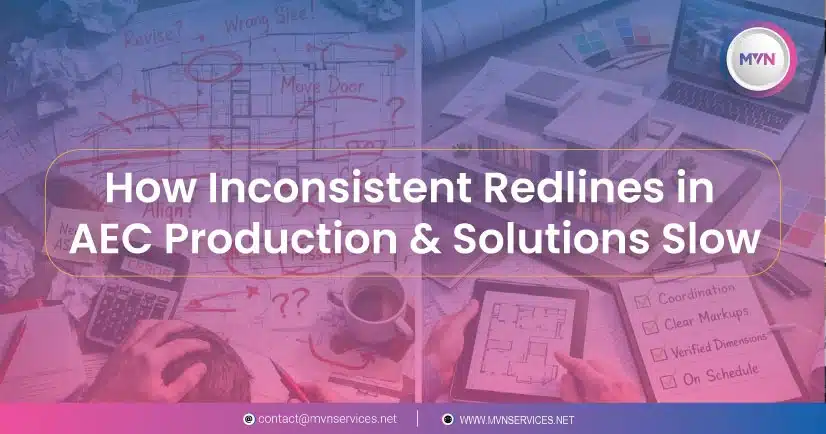
4. Apply Selective Redlines
- Focus on components that deviate from design intent instead of editing every drawing.
- Use digital redlining tools to provide context and clarity for changes.
- Maintain untouched elements to preserve the original vision.
5. Coordinate Using Meticulous Quality Control
- Perform regular QA/QC checks to ensure documentation meets standards.
- Encourage collaboration among engineers, contractors, and designers at every phase.
- Consider third-party QC for an additional verification layer.
Benefits of Protecting Design Intent While Outsourcing
- Reduced risk of rework and costly delays
- Faster project delivery and increased efficiency
- Consistent documentation quality across all teams
- Improved stakeholder confidence and trust
By implementing these practices, AEC firms can confidently outsource MEP documentation while ensuring that the original engineering vision remains intact.
Conclusion
Outsourcing MEP documentation doesn’t have to mean losing control of your design. By establishing unified standards, using annotated models, staging approvals, applying selective redlines, and enforcing rigorous QA/QC, engineering firms can protect their design intent and ensure high-quality deliverables.
Partnering with a skilled outsourcing provider ensures that your remote team delivers work that aligns perfectly with your vision, reduces errors, and accelerates project timelines.
If your AEC firm is looking to outsource MEP Design Services or BIM Services without compromising on quality, consider working with us enforces these best practices every step of the way.