
 6 min read
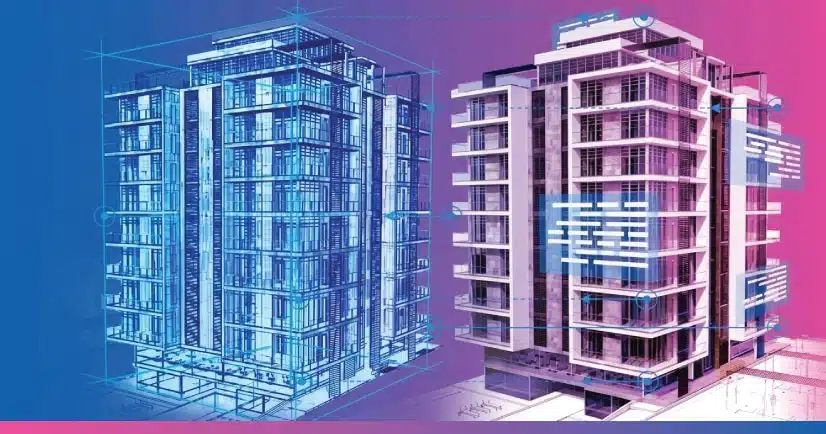
Modern Mechanical, Electrical, and Plumbing (MEP) design has shifted significantly over the last decade, driven by digital transformation and Building Information Modeling (BIM). Among BIM platforms, Autodesk Revit has become the industry standard for producing coordinated, data-rich MEP models that improve accuracy, reduce clashes, and streamline construction documentation.
At the same time, many US-based MEP consulting firms are facing increasing pressure, tight project deadlines, skilled labor shortages, and rising operational costs. To stay competitive, firms are increasingly adopting outsourced MEP design and BIM modeling teams.
However, outsourcing only delivers value when integration is seamless. Poor coordination leads to rework, delays, and misalignment with US codes and standards. This article explains how a Revit-based MEP workflow operates and how outsourced teams integrate effectively into US engineering environments.
Understanding the Revit-Based MEP Workflow
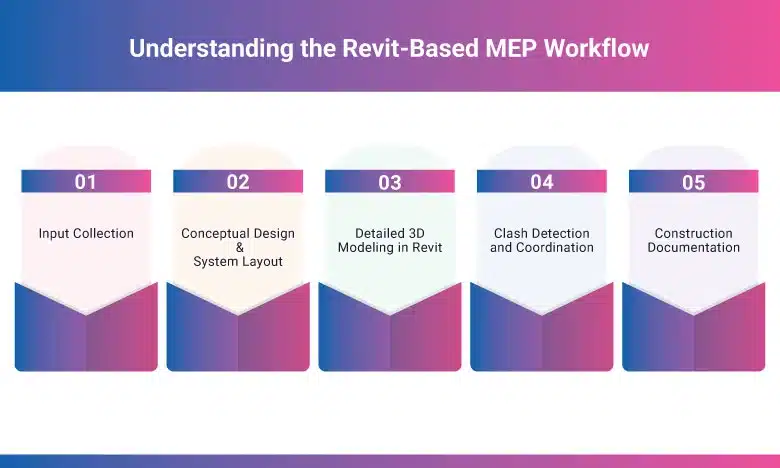
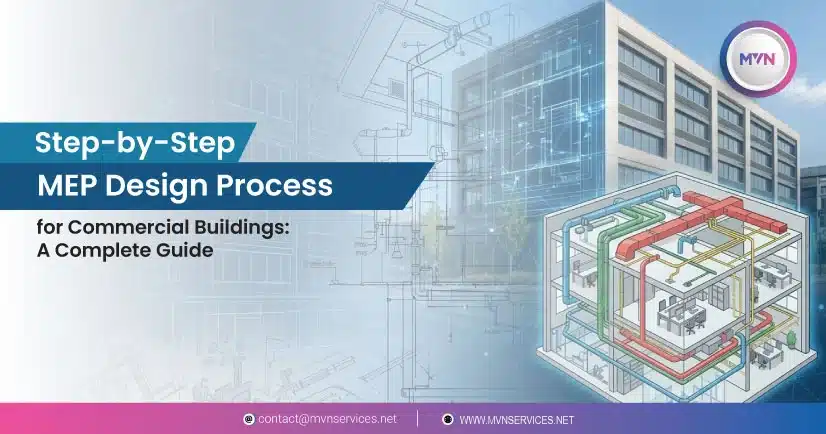
A Revit-based MEP workflow is a structured process where HVAC, electrical, and plumbing systems are designed, modeled, and documented within a single coordinated BIM environment.
The workflow typically includes:
1. Input Collection
The process begins with gathering architectural drawings, structural models, design specifications, and project requirements. These inputs define spatial constraints, load requirements, and system expectations.
2. Conceptual Design & System Layout
MEP engineers develop initial system concepts, including duct routing, pipe layouts, electrical risers, and equipment placement based on project requirements and building usage.
3. Detailed 3D Modeling in Revit
All mechanical, electrical, and plumbing systems are modeled in Revit. This stage ensures spatial coordination and allows early detection of potential conflicts between systems.
4. Clash Detection and Coordination
Using tools like Navisworks or Revit interference checks, designers identify clashes between disciplines (MEP vs. structural or architectural). Adjustments are made to resolve conflicts before construction.
5. Construction Documentation
Final coordinated models are used to generate construction drawings, schedules, and detailed sheets required for permitting and execution.
This structured workflow ensures accuracy, efficiency, and coordination across all building systems.
Role of Outsourced Teams in the Workflow
Outsourced MEP teams typically function as an extension of the in-house engineering department. Rather than replacing core engineering decisions, they support execution and production tasks.
Their responsibilities often include:
- 3D MEP modeling in Autodesk Revit
- Sheet creation and drafting support
- HVAC, plumbing, and electrical system detailing
- BIM coordination support and clash detection assistance
- Updating models based on RFIs and design revisions
In many US firms, senior engineers focus on design decisions and approvals, while outsourced teams handle production-heavy BIM tasks. This division of work allows firms to increase output without expanding internal headcount.
Integration Process Between In-House and Outsourced Teams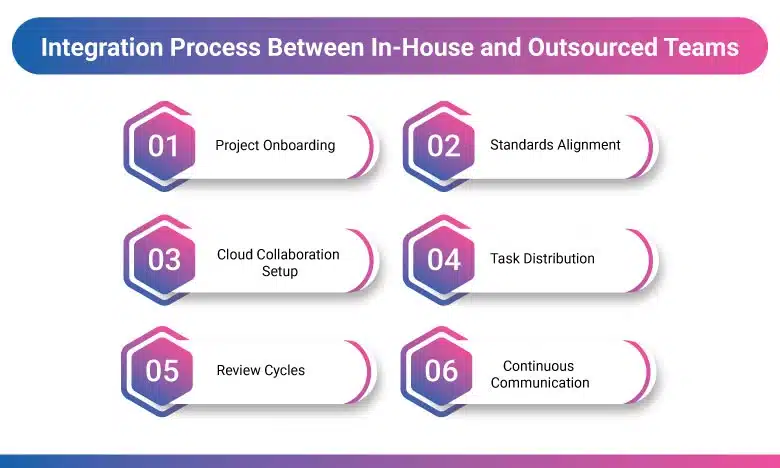
Successful outsourcing depends on a well-defined integration process. Without structure, communication gaps can create costly errors. A standardized workflow typically includes:
1. Project Onboarding
The outsourcing team reviews all project inputs, including drawings, specifications, BIM execution plans (BEP), and client standards.
2. Standards Alignment
Before modeling begins, both teams align on:
- Revit templates
- Family libraries
- Naming conventions
- Level of Development (LOD) requirements
- Layering and sheet standards
This ensures consistency across all deliverables.
3. Cloud Collaboration Setup
Most firms use platforms like Autodesk Construction Cloud (ACC) or BIM 360. These tools allow real-time model sharing, version control, and coordinated updates.
4. Task Distribution
Work is divided into clear packages such as HVAC ducting, electrical layouts, plumbing systems, or specific building zones.
5. Review Cycles
Regular review cycles are established where US-based engineers review outsourced work, provide feedback, and approve updates.
6. Continuous Communication
Daily or weekly coordination meetings ensure alignment on progress, issues, and upcoming tasks.
This structured integration reduces ambiguity and ensures both teams operate as a single unified unit.
Standards and Quality Control in Outsourced MEP Design
One of the biggest concerns for US engineering firms is quality assurance. To address this, outsourcing partners must follow strict QA/QC processes aligned with US standards.
Key components include:
Code Compliance
All designs must comply with applicable US building codes, including mechanical ventilation standards, electrical load requirements, and plumbing regulations.
Internal Quality Checks
Before submission, models go through:
- Clash detection verification
- Geometry accuracy checks
- System connectivity validation
- Sheet consistency review
BIM Execution Plan (BEP)
A BEP defines project-specific rules for modeling, coordination, and deliverables. It ensures both in-house and outsourced teams follow the same methodology.
Senior Engineer Review
Final output is reviewed by experienced engineers to ensure technical accuracy and compliance before delivery.
This layered QA approach significantly reduces rework and improves client confidence.
Tools and Technologies Used in Revit-Based MEP Outsourcing
Efficient collaboration depends on the right technology stack. Common tools include:
- Autodesk Revit – Core platform for MEP modeling
- Navisworks Manage – Clash detection and coordination
- Autodesk Construction Cloud (ACC) – Cloud-based collaboration
- BIM 360 – Model sharing and version control
- Dynamo – Automation for repetitive BIM tasks
- Shared servers/cloud storage – File management and coordination
These tools ensure real-time collaboration between US firms and offshore teams, eliminating traditional communication delays.
Benefits of Seamless Outsourced Integration
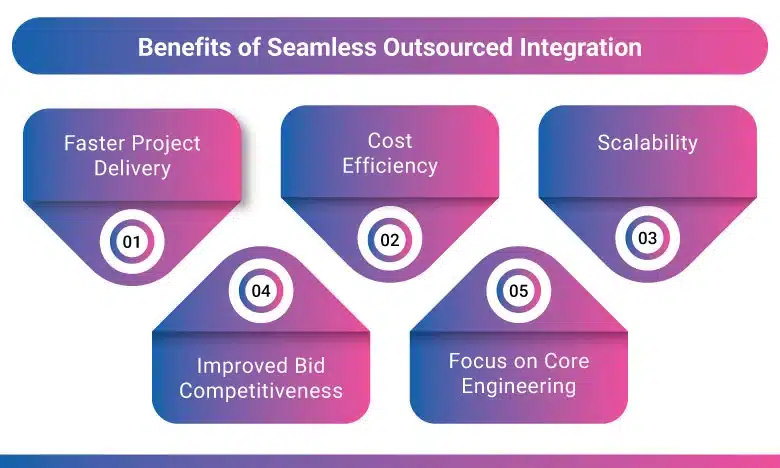
When properly implemented, outsourcing delivers significant advantages to MEP firms:
1. Faster Project Delivery
With distributed teams working across time zones, projects can progress 24/7.
2. Cost Efficiency
Firms reduce overhead costs associated with hiring full-time staff in the US.
3. Scalability
Outsourced teams allow firms to handle peak workloads without long-term commitments.
4. Improved Bid Competitiveness
Lower production costs enable firms to submit more competitive bids.
5. Focus on Core Engineering
Senior engineers can focus on design decisions, client interaction, and project strategy rather than production work.
Common Challenges and How They Are Solved
Despite its benefits, outsourcing comes with challenges that must be actively managed.
Communication Gaps
Solved through structured reporting, daily updates, and clear task definitions.
Time Zone Differences
Instead of being a limitation, time differences are used to create continuous 24-hour workflows.
Inconsistent Standards
Resolved by enforcing strict BIM execution plans and standardized templates.
Revision Management
Handled through version control systems and clear documentation of changes.
With proper systems in place, these challenges become manageable and do not affect project quality.
Conclusion
Revit-based MEP design workflows have transformed how engineering projects are delivered. As US MEP firms continue to face increasing pressure on cost, staffing, and timelines, outsourcing has become a strategic solution rather than just a cost-saving option.
However, success depends entirely on seamless integration. When outsourced teams are properly aligned with in-house standards, workflows, and communication systems, they become a powerful extension of the firm enhancing capacity, improving delivery speed, and maintaining high-quality engineering output.
The future of MEP design is not fully in-house or fully outsourced; it is a hybrid model where collaboration, technology, and standardized workflows define success.