
 5 min read
In modern construction projects, efficiency, coordination, and accuracy are no longer optional. They are essential. Yet many AEC firms still struggle with a common question: what is the real difference between MEP design and BIM, and why does it matter?
While both are critical to building design and execution, they serve very different purposes. MEP design focuses on engineering calculations and system planning, whereas BIM (Building Information Modeling) brings those systems together into a coordinated, data-rich environment.
Understanding this difference is not just technical. It directly impacts project timelines, cost control, and overall construction quality.
What is MEP Design?
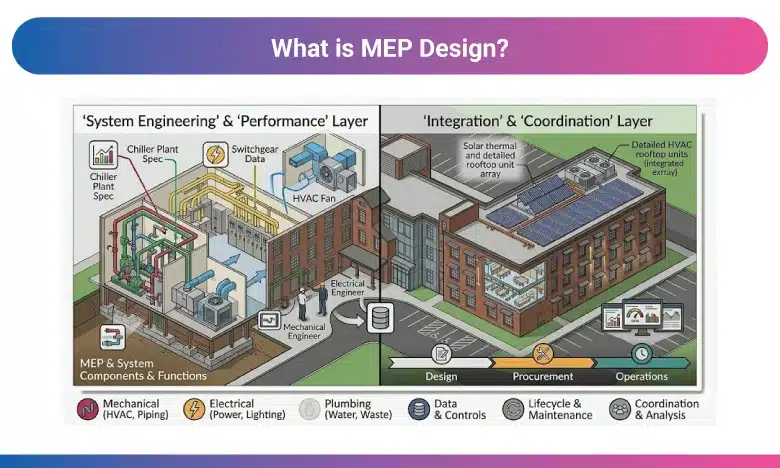
MEP design refers to the engineering process of designing a building’s Mechanical, Electrical, and Plumbing systems. These systems are responsible for making a building functional, safe, and comfortable.
Key Components of MEP Design
- Mechanical (HVAC): Heating, ventilation, and air conditioning systems
- Electrical: Power distribution, lighting, fire alarms, and low-voltage systems
- Plumbing: Water supply, drainage, and fire protection systems
MEP engineers focus on:
- Load calculations (heating, cooling, electrical demand)
- System sizing (ducts, pipes, cables)
- Equipment selection
- Code compliance and safety standards
- Energy efficiency optimization
Typical Outputs
- 2D drawings and layouts
- Technical specifications
- Design reports and calculations
Key Limitation
While MEP design ensures that systems are accurate and compliant, it is often done in isolation. This can lead to:
- Conflicts with structural or architectural elements
- Coordination issues during construction
- Increased risk of rework on-site
What is BIM (Building Information Modeling)?
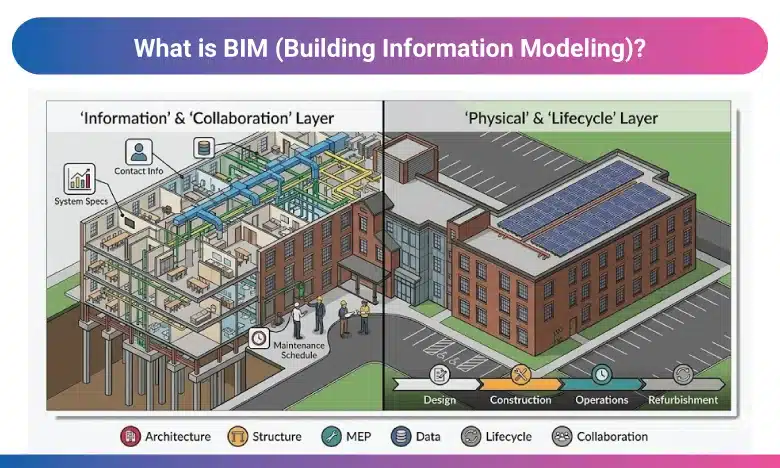
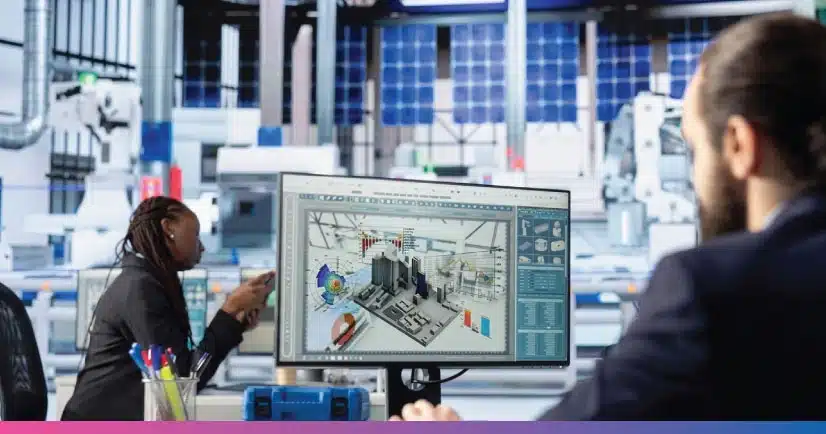
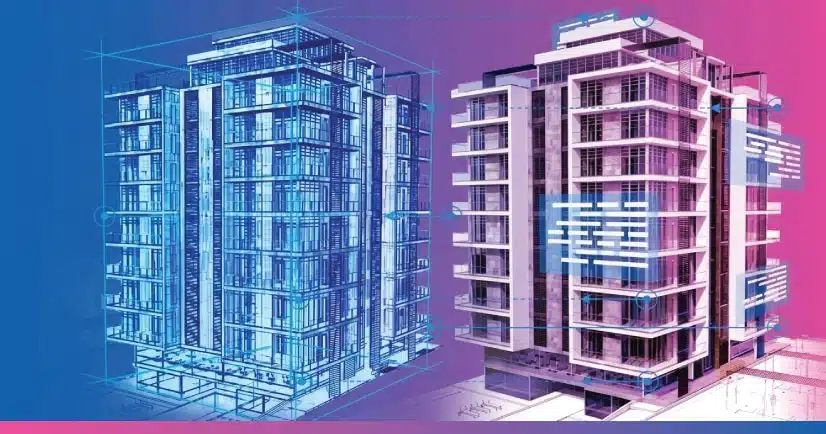
BIM (Building Information Modeling) is a digital process that integrates all aspects of a building, including architectural, structural, and MEP systems, into a single coordinated 3D model.
Unlike traditional design methods, BIM is not just about visualization. It is about intelligent, data-driven modeling and collaboration.
Key Features of BIM
- 3D Modeling: Realistic representation of building systems
- Clash Detection: Identifies conflicts between systems before construction
- Data Integration: Includes materials, specifications, and performance data
- Collaboration: Multiple teams work on a shared platform
- Lifecycle Management: Supports design, construction, and facility management
What Happens in BIM for MEP?
- Creation of detailed 3D models for ducts, pipes, and conduits
- Coordination between MEP, structural, and architectural systems
- Automated clash detection and resolution
- Quantity take-offs and cost estimation
- Construction sequencing and planning
MEP Design vs BIM: Key Differences
Understanding the distinction between MEP design and BIM is crucial for effective project execution.
| Aspect | MEP Design | BIM |
|---|---|---|
| Primary Focus | Engineering calculations and system design | Coordination and integration of all building systems |
| Output | 2D drawings and technical reports | 3D data-rich models |
| Workflow | Discipline-specific | Multi-disciplinary collaboration |
| Visualization | Limited | Advanced 3D visualization and simulation |
| Coordination | Manual | Automated clash detection |
| Project Stage | Design phase | Design, construction, and operation |
| Data Usage | Limited | Extensive data for lifecycle management |
Why Traditional MEP Design Alone Is Not Enough
In complex construction projects, relying solely on traditional MEP design can lead to several challenges:
- Coordination Issues: Different teams work separately, increasing the risk of system clashes.
- On-Site Rework: Conflicts between ducts, pipes, and structural elements often appear during construction, leading to costly changes.
- Delays and Cost Overruns: Rework, redesign, and miscommunication can significantly impact project timelines and budgets.
- Limited Visualization: 2D drawings make it difficult for stakeholders to fully understand system layouts.
How BIM Enhances MEP Design
Integrating MEP design into BIM workflows transforms how projects are delivered.
- Clash Detection and Conflict Resolution: BIM identifies and resolves clashes between systems before construction begins, reducing costly errors.
- Improved Collaboration: All stakeholders work on a shared model, ensuring better coordination.
- Better Visualization: 3D models provide clear insights into system layouts, improving decision-making.
- Accurate Quantity Take-Offs: Material quantities can be extracted directly from the model, improving cost estimation.
- Faster Project Delivery: Streamlined workflows and reduced rework lead to faster project completion.
MEP Design and BIM: Not Competing, But Complementary
A common misconception is that BIM replaces MEP design. In reality, they work together.
- MEP design provides the engineering foundation
- BIM provides the coordination and execution framework
Without proper MEP design, BIM models lack accuracy. Without BIM, MEP designs lack coordination.
Real-World Perspective
In large-scale projects such as hospitals, airports, and commercial buildings:
- MEP engineers define system performance
- BIM teams ensure systems fit within the building without conflicts
This integration enables efficient and error-free construction.
Key Benefits for AEC Firms
For AEC firms, adopting BIM for MEP design offers clear advantages:
- Reduced Risk: Early detection of design conflicts minimizes construction risks.
- Cost Savings: Less rework leads to significant cost reduction.
- Improved Project Quality: Better coordination results in higher-quality outcomes.
- Enhanced Client Satisfaction: Clear visualization and fewer errors improve client confidence.
- Scalability: BIM workflows allow firms to handle complex projects more efficiently.
When Should You Use BIM for MEP?
BIM is especially valuable for:
- Large and complex projects
- High-rise buildings
- Hospitals and healthcare facilities
- Data centers and industrial projects
- Projects requiring high coordination between disciplines
The Growing Importance of BIM in MEP Engineering
The construction industry is rapidly moving toward digital transformation. Today, many international projects require BIM-based coordination and data-driven project delivery. AEC firms that continue to rely solely on traditional methods risk falling behind in a highly competitive market.
How MVN Engineering Services Can Help
At MVN Engineering Services, we specialize in delivering integrated MEP design and BIM solutions tailored to the needs of global AEC firms. Our team helps clients:
- Develop accurate and code-compliant MEP designs
- Create coordinated BIM models with clash-free execution
- Improve project efficiency and reduce rework
- Scale operations with reliable offshore support
Conclusion
The difference between MEP design and BIM lies in their roles within a project. MEP design focuses on engineering accuracy, while BIM brings these systems into a coordinated digital environment. Combining MEP design with BIM allows AEC firms to reduce risks, minimize rework, and improve overall project efficiency. As projects continue to grow in complexity, adopting both is essential for delivering high-quality, cost-effective, and well-coordinated buildings.