In today’s rapidly evolving built environment, fire safety is one of the most critical considerations in building design, yet it is often overlooked until it becomes an urgent necessity. Whether for commercial, industrial, or residential buildings, protecting people and property from the devastating effects of fire requires careful planning and professional expertise. This is where fire protection design services come into play. These services combine engineering knowledge, regulatory compliance, and strategic planning to ensure that buildings are equipped to prevent, detect, and control fire hazards effectively.
In this blog, we will delve into the fundamentals of fire protection design services, including key components, their importance, industries that require these services, and a detailed look at how these services work. We will also explore the distinctions between passive and active fire protection systems, and conclude with thoughts on the future of fire safety.
What Are Fire Protection Design Services?
At their core, fire protection design services are professional engineering and consulting services focused on safeguarding buildings and occupants against fire hazards. They involve analyzing risks, planning protective measures, and designing systems that prevent fires, control their spread, and facilitate safe evacuation.
Fire protection design is usually handled by certified fire protection engineers or consultants who create fire protection plans tailored to the specific needs of a building. These professionals take into account building type, occupancy, local fire codes, and industry standards such as the NFPA (National Fire Protection Association) guidelines.
Essentially, these services bridge the gap between building design and safety compliance. By integrating fire protection measures during the design phase, rather than after construction, buildings can achieve both regulatory compliance and optimal safety.
Key Components of Fire Protection Design Services
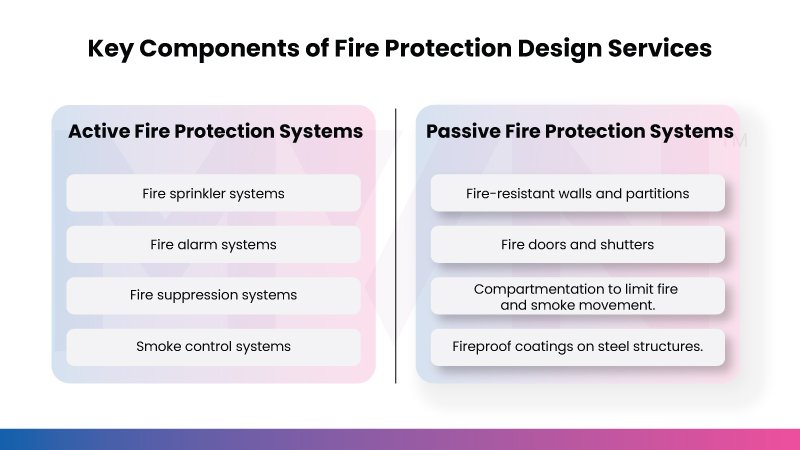
Fire protection design services involve a multifaceted strategy that integrates several essential components. Each component plays an instrumental role in ensuring that a structure is prepared to handle a potential fire emergency.
Active Fire Protection Systems
Active systems are those that actively detect and respond to a fire event. Examples include:
- Fire sprinkler systems: Automatically release water or other fire suppression agents when a fire is detected.
- Fire alarm systems: Detect smoke or heat and alert occupants to evacuate.
- Fire suppression systems: Use gases, foam, or chemicals to control fires, especially in areas like data centers or industrial plants.
- Smoke control systems: Help manage airflow and prevent smoke from spreading to evacuation routes.
Passive Fire Protection Systems
Passive fire protection measures are built into the structure and aim to contain fires and prevent their spread:
- Fire-resistant walls and partitions.
- Fire doors and shutters.
- Compartmentation to limit fire and smoke movement.
- Fireproof coatings on steel structures.
The combination of active and passive fire protection systems ensures a building is not only resistant to fire but also capable of minimizing damage and allowing safe evacuation for occupants.
Importance of Fire Protection Design Services
Investing in professional fire protection design is not just a regulatory requirement, it is crucial for protecting lives, property, and financial investments.
1. Life Safety
Properly designed systems ensure that occupants have enough time to evacuate safely in case of a fire. Well-planned exit routes, alarms, and suppression systems significantly reduce fatalities.
2. Property Protection
Fires can cause devastating property damage. Fire protection design minimizes losses by controlling fire spread and allowing early intervention.
3. Regulatory Compliance
Adherence to local fire codes and NFPA standards is mandatory for most building types. Non-compliance can lead to penalties, legal issues, or even closure of a facility.
4. Insurance and Risk Management
Many insurance providers require evidence of professional fire protection design to provide coverage. Buildings with approved systems may also benefit from reduced premiums.
5. Early Hazard Mitigation
By assessing risks during the design phase, fire protection engineers can prevent potential hazards before construction begins. This proactive approach is far more effective than reactive firefighting measures.
Industries and Buildings That Require Fire Protection Design
While fire protection is important in all buildings, certain sectors have more stringent requirements due to occupancy, risk, and regulatory standards.
- Residential High-Rises: Apartment buildings and condominiums must include fire-resistant materials, alarms, and evacuation planning.
- Commercial Buildings: Offices, shopping malls, warehouses, and hotels require comprehensive fire protection due to high occupancy and complex layouts.
- Healthcare Facilities: Hospitals and clinics require specialized systems to protect vulnerable patients and critical medical equipment.
- Industrial and Manufacturing Plants: Factories, chemical plants, and warehouses store combustible materials and require advanced suppression systems.
- Transportation Hubs: Airports, train stations, bus terminals, and other transportation hubs are highly complex infrastructures that serve thousands of people daily. Fire protection systems are critical to manage emergencies effectively and avoid mass casualties.
- Educational Institutions: Schools, universities, and training centers also require fire protection design mandates. With a large number of occupants, clear evacuation procedures and reliable fire suppression systems are essential.
- Special-Purpose Buildings: Buildings that house data centers, museums, warehouses, and chemical plants have unique fire protection challenges.
How Fire Protection Design Services Work
Understanding the process behind fire protection design services helps clarify why they are so essential:
1. Risk Assessment and Site Inspection
Engineers evaluate the building layout, occupancy type, and potential fire hazards. This includes reviewing electrical systems, material storage, and past fire incidents.
2. Designing the Fire Protection System
Based on the assessment, a customized plan is created that integrates active and passive systems while adhering to safety codes and regulations.
3. Compliance Checks
The design is reviewed against NFPA standards, local fire codes, and insurance requirements to ensure regulatory compliance.
4. Installation and Testing
Fire protection systems are installed under professional supervision, followed by rigorous testing to confirm functionality.
5. Ongoing Maintenance and Review
Fire systems require regular inspections and maintenance to ensure they remain effective. Periodic updates may also be necessary to meet changing codes or building modifications.